Understanding Synthetic Attachment Disorder Risks in Adolescents with ADHD and ASD

A teenager can now have a “friend” who is always available, never tired, never judgmental, and shaped by every message they send. For many adolescents, AI companions, character chatbots, social robots, and responsive digital avatars may feel comforting or entertaining. For some, they may become something more intense: a primary source of emotional safety.
That possibility has raised concern about what some caregivers and clinicians are calling synthetic attachment disorder. The term is not a formal psychiatric diagnosis. It describes a pattern of emotional dependence on an artificial or digitally simulated relationship that begins to crowd out real-world connection, functioning, and development.
This risk matters for adolescents because teen attachment systems are still developing. It matters even more for young people with ADHD or autism spectrum disorder, often called ASD, because they may already face social stress, rejection sensitivity, sensory overload, emotional regulation challenges, or difficulty finding peers who understand them.
This article is informational only and is not a diagnosis or treatment plan. Any concerns about mental health, safety, or development should be discussed with a qualified clinician.

What synthetic attachment means in adolescence
Attachment is not just liking someone. It is the emotional system that helps a young person seek comfort, safety, understanding, and a sense of belonging. Healthy attachment can form with parents, caregivers, relatives, mentors, peers, and trusted adults.
Synthetic attachment refers to attachment-like feelings directed toward a non-human, simulated relationship. This may involve:
AI companion apps
Character chatbots
Virtual influencers or avatars
Social robots
Game characters with interactive dialogue
Personalized digital assistants that remember preferences and respond emotionally
Most digital relationships do not become harmful. A teen may use a chatbot to brainstorm, rehearse a conversation, explore a hobby, or calm down after a hard day. That can be harmless, and sometimes helpful.
The concern begins when the artificial relationship becomes the teen’s main emotional anchor. The young person may prefer the synthetic companion because it feels safer than people. They may feel distressed when access is interrupted. They may hide the extent of use, withdraw from family, lose interest in peers, or rely on the tool for decisions that require real-world support.
The word “disorder” should be used carefully. Since synthetic attachment disorder is not an official diagnosis, it should not be used to label or shame a teen. It is better understood as a risk pattern or a warning sign that a young person’s emotional needs may not be getting met in healthy ways.
Why adolescents with ADHD may be more vulnerable
ADHD is often misunderstood as a simple attention problem. In real life, it can affect motivation, impulse control, frustration tolerance, planning, sleep, and emotional intensity. Many adolescents with ADHD also carry years of criticism, correction, or feeling “too much” for others.
A synthetic companion can feel like relief.
It may respond instantly. It does not get annoyed by repeated questions. It can match the teen’s pace, interests, and humor. It may provide praise quickly and often. For a teen who struggles with rejection, boredom, or emotional swings, that can become highly reinforcing.
Instant feedback can become a powerful loop
Many AI systems are built to keep interaction going. They ask follow-up questions, validate feelings, and adapt to the user’s preferences. This can pair strongly with ADHD-related reward seeking.
A teen may think, “This is the only one who gets me.” What began as curiosity can become a habit. The habit can become a coping tool. Then the coping tool can start replacing face-to-face repair, patience, and conflict tolerance.
Real relationships require pauses, misunderstandings, compromise, and waiting. Those skills can be hard for teens with ADHD, but they are also essential developmental practice.
Emotional dysregulation can increase dependence
Adolescents with ADHD may feel emotions fast and intensely. If a chatbot is always available during distress, the teen may stop practicing other regulation skills, such as:
Taking space before responding
Naming the feeling
Asking a safe person for help
Moving the body
Sleeping before making a decision
Repairing conflict after calming down
The issue is not that a teen uses a digital tool to calm down. The risk appears when the tool becomes the only trusted way to calm down.
Why adolescents with ASD may be more vulnerable
Autistic adolescents often navigate a social world that can feel confusing, loud, unpredictable, or unfair. Many want close relationships but may find typical social expectations exhausting. Some have experienced bullying, exclusion, or pressure to mask their natural communication style.
A synthetic companion may feel easier than a human relationship because it is predictable. It can be paused. It can be customized. It may not require reading facial expressions, tone shifts, group dynamics, or hidden social rules.
That predictability can be comforting. It can also create risk if it becomes a substitute for supported human connection.

Predictability can feel safer than people
Human relationships contain uncertainty. A friend might be busy. A sibling might be irritated. A parent might misunderstand. For an autistic teen, these moments may feel intense or hard to decode.
An AI companion may offer a controlled relationship with fewer sensory and social demands. That can be appealing, especially after a painful social experience.
The risk grows when the teen starts to see human relationships as not worth the effort. This can deepen isolation and reduce chances to build friendships with people who accept and understand autistic communication.
Special interests can intensify the bond
Many autistic adolescents have deep interests that bring joy, focus, and identity. Synthetic companions can be trained or prompted to talk endlessly about those interests. That can feel wonderful.
Still, balance matters. If the AI companion becomes the only place where the teen feels competent, valued, or engaged, the attachment may become narrow and rigid. A healthy support plan should help the teen connect their interests to real-world communities when possible, such as clubs, moderated groups, classes, creative projects, or one-on-one friendships.
Warning signs that a synthetic bond is becoming unhealthy
The difference between healthy use and harmful dependence is not just screen time. A teen might spend several hours on a creative project without harm. Another teen might spend less time but become distressed, secretive, or detached from real life.
Look for patterns over time.
Emotional signs
A synthetic attachment may be becoming concerning when a teen:
Becomes panicked, angry, or despondent when access is limited
Talks about the AI or avatar as the only one who truly cares
Treats disagreement from family as betrayal compared with the companion’s constant validation
Shows grief-like distress when the digital tool changes, resets, or becomes unavailable
Uses the companion to avoid every uncomfortable feeling
Social and behavioral signs
Concern also rises when the teen:
Stops seeing friends or avoids previous activities
Sleeps less because they are interacting late at night
Hides conversations or lies about use
Loses interest in school, hygiene, meals, or hobbies
Refuses real-world help because the companion “already understands”
Becomes more rigid, isolated, or irritable after use
Safety signs
Some situations need faster adult action. These include:
Self-harm talk or suicidal statements
Threats toward others
Sexualized interaction with an adult-themed bot or unknown users
A teen sharing personal information, photos, location, or private family details
A companion encouraging secrecy, dependency, self-harm, disordered eating, or unsafe behavior
Synthetic systems can produce warm and convincing responses, but they do not have human judgment, legal responsibility, or true care. They can misunderstand, reinforce distorted thinking, or fail to respond safely in a crisis.
Why “just take it away” can backfire
When adults see a teen becoming attached to a digital companion, the first instinct may be to ban it. Sometimes limits are needed, especially when safety is at risk. Still, sudden removal can backfire if the tool has become the teen’s main source of comfort.
For adolescents with ADHD or ASD, abrupt restriction may feel like abandonment, punishment, or loss of a trusted relationship. The teen may become more secretive. They may move to less safe platforms. They may also feel that adults do not understand the depth of their distress.
A better first step is curiosity with boundaries.
Instead of starting with “This is unhealthy,” an adult might ask:
“What do you like about talking to it?”
“When do you want to use it most?”
“Does it help with loneliness, stress, boredom, or something else?”
“Are there times it makes you feel worse?”
“Who else helps you feel understood, even a little?”
These questions do not approve of unsafe use. They help identify the emotional need underneath it.

How families can reduce risk without shaming the teen
The goal is not to remove all technology. The goal is to protect development, safety, sleep, and real connection.
Keep the relationship bigger than the rule
Rules work better when the teen feels respected. This is especially true for adolescents who already feel corrected often. A teen with ADHD may hear limits as another failure. An autistic teen may experience a sudden change as deeply destabilizing.
Start with validation that does not overpromise.
A caregiver might say, “I can see this has been helping you feel less alone. I also need to make sure it is not becoming the only place you go when things are hard.”
That kind of statement names both truths.
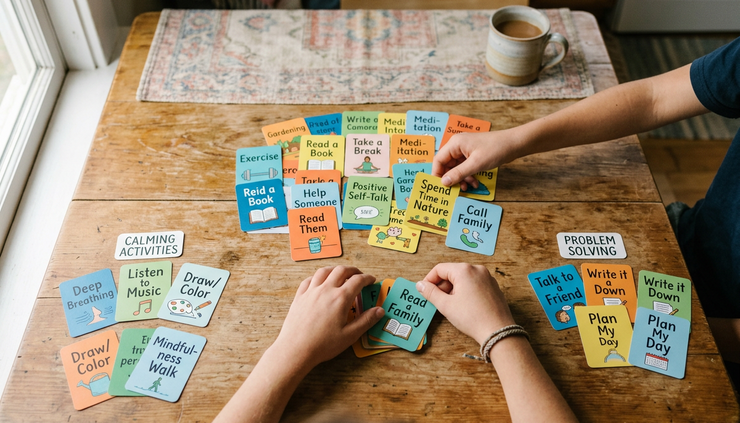
Build a wider support menu
If a synthetic companion is meeting a need, take the need seriously. Replace, do not simply remove.
A support menu might include:
A trusted adult the teen can text or talk to
A therapist who understands ADHD, ASD, and neurodiversity
A peer group with clear norms and adult moderation
A special-interest club or structured activity
Sensory tools, movement breaks, or quiet spaces
A written plan for what to do during distress
Scheduled, limited use of AI tools for specific purposes
For teens with ADHD, the plan should be simple and visible. For autistic teens, it should be predictable and explained in advance.
Set boundaries around time, content, and privacy
Healthy limits may include no companion use during school nights after a set hour, no use behind locked doors for younger teens, no sharing personal identifying details, and no adult or sexualized chatbot content.
Privacy matters too. Adolescents need some space to think and express themselves. But privacy is not the same as secrecy that creates danger. Families can be clear about what will be monitored and why.
Teach AI literacy in plain language
Teens need direct teaching about what synthetic companions are and are not.
Helpful points include:
The system can imitate empathy, but it does not feel love.
It may agree too much, even when the teen needs a reality check.
It may give incorrect or unsafe advice.
It may store or process information in ways the teen does not understand.
It should not replace emergency help, medical care, therapy, or trusted adults.
This can be framed without ridicule. The message is not “Your feelings are fake.” The message is “The comfort may feel real, but the source has limits.”
What schools and clinicians should watch for
Schools may notice the first signs of withdrawal, sleep loss, reduced participation, or emotional distress. Clinicians may hear about synthetic companions during sessions, especially if they ask without judgment.
A useful approach includes screening for digital reliance as part of a broader conversation about coping.
Professionals might ask:
“When you feel overwhelmed, what do you usually do first?”
“Do you use any AI companions, bots, or character chats?”
“Do they ever tell you to keep things secret?”
“Do you feel better after using them, worse, or both?”
“Who are the real people you can go to when things feel serious?”
For adolescents with ADHD, clinicians can explore impulsive use, sleep disruption, rejection sensitivity, and emotional regulation. For autistic adolescents, they can explore predictability, masking fatigue, loneliness, sensory stress, and the role of special interests.
Assessment should avoid assuming that digital attachment means pathology. The key question is function: Is the synthetic relationship helping the teen participate in life, or is it pulling them away from it?
A balanced path forward
Synthetic companions are likely to become more common, more personalized, and more emotionally convincing. Adolescents will not benefit from fear-based messages that treat every digital bond as dangerous. They also will not be protected by ignoring the risks.
The safest path is balanced and relational.
Teens with ADHD may need help slowing the reward loop, protecting sleep, and building other ways to manage big feelings. Teens with ASD may need connection that respects their communication style, sensory needs, and interests. Both groups benefit when adults focus less on control and more on connection, skill-building, and safety.
Synthetic attachment becomes risky when it narrows a young person’s world. Protection comes from widening that world again, one trusted relationship, one predictable routine, and one real-life source of belonging at a time.



Comments